

Protein Bars Market to Surge to USD 9.556 Billion by 2035 at 6.3% CAGR, Fueled by Plant-Based and Health Snacking Trends
Protein bars market
Protein Bars Market Research Report Information by Product Type, Category, Distribution Channel, Consumer Segment, and Region Forecast to 2035
Plant-based proteins, active lifestyles, and increasing health awareness are expected to remain key factors shaping the future of the Protein Bars Market.”
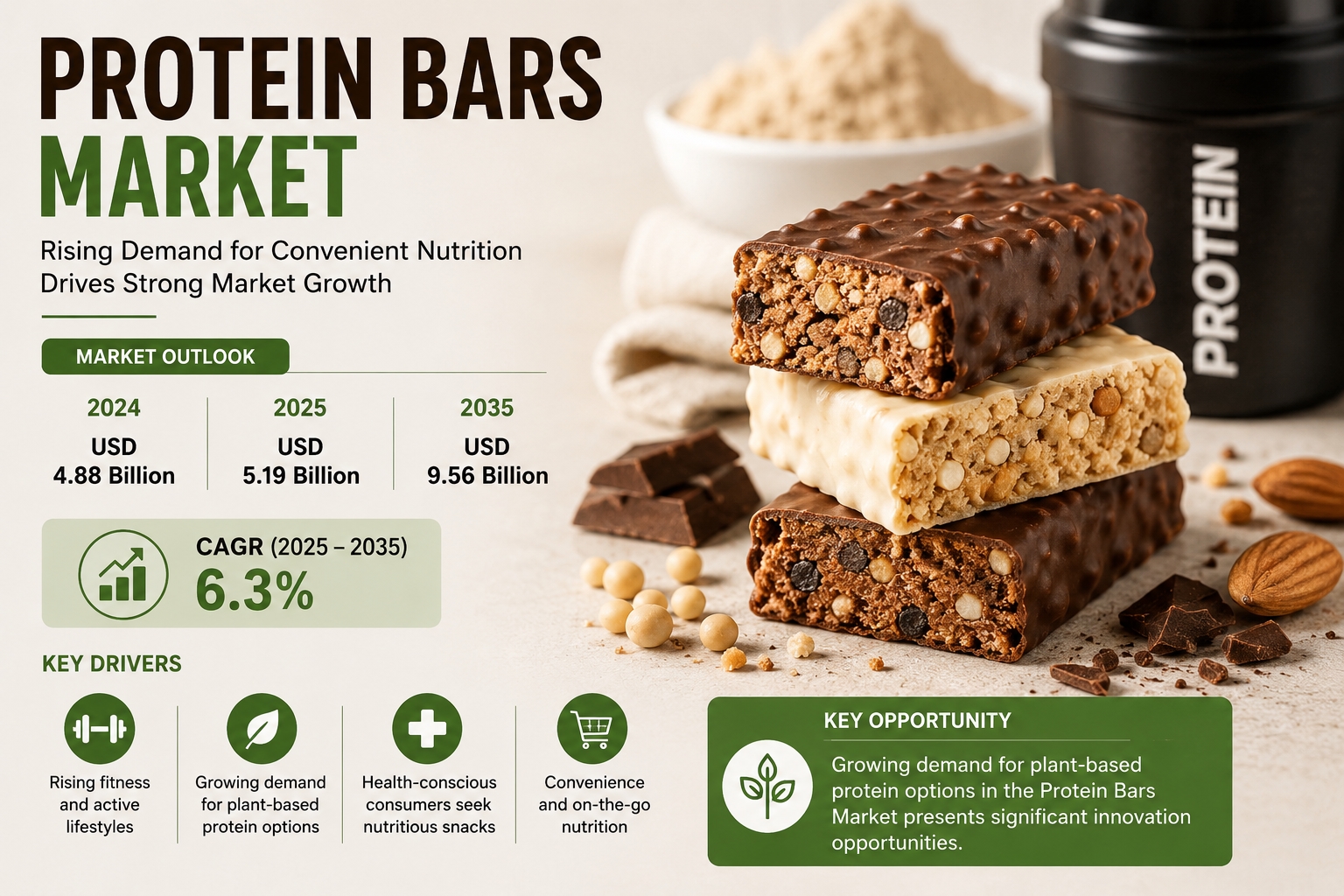
NEW YORK, NY, UNITED STATES, June 17, 2026 /EINPresswire.com/ -- The global Protein Bars Market is experiencing significant momentum as consumers increasingly prioritize convenient, nutritious, and protein-rich snack options. According to the latest industry analysis published by Market Research Future, the Protein Bars Market was valued at USD 4.88 billion in 2024 and is projected to increase to USD 5.19 billion in 2025. The market is anticipated to reach USD 9.56 billion by 2035, registering a compound annual growth rate (CAGR) of 6.3% during the forecast period from 2025 to 2035.— Market Research Future (MRFR)
The increasing focus on health-conscious lifestyles, active nutrition, fitness-oriented dietary habits, and convenient on-the-go snacking continues to support the expansion of the protein bars industry worldwide. Consumers across all age groups are increasingly seeking products that combine nutritional value with convenience, creating favorable conditions for innovation and market development.
Rising Consumer Interest in Healthy Snacking Drives Market Expansion
Consumer eating habits have evolved significantly over the past decade. Traditional snack products are increasingly being replaced by options that offer nutritional benefits, functional ingredients, and enhanced satiety. Protein bars have emerged as a preferred solution for consumers seeking healthier alternatives to conventional snacks.
Busy lifestyles, longer working hours, and growing awareness of balanced nutrition have contributed to the popularity of protein bars among professionals, students, athletes, and general consumers. The category has expanded beyond sports nutrition and now appeals to a broad demographic looking for convenient ways to incorporate protein into daily diets.
Manufacturers are responding to this shift by developing products that cater to various nutritional requirements, including high-protein, low-sugar, gluten-free, keto-friendly, and plant-based formulations. These innovations continue to strengthen consumer engagement and support market growth.
As wellness-oriented consumption patterns become more mainstream, protein bars are expected to remain an important segment within the broader functional foods industry.
Get Full PDF Sample Copy of Report: (Including Full TOC, List of Tables & Figures, Chart) @ https://www.marketresearchfuture.com/sample_request/5417
Growing Fitness Culture Strengthens Demand for Protein-Enriched Products
The increasing popularity of fitness and active lifestyles remains a major factor influencing the Protein Bars Market. Consumers involved in sports, exercise, weight management, and physical wellness programs frequently incorporate protein-rich snacks into their routines.
Protein bars offer a convenient solution for pre-workout energy, post-workout recovery, and meal supplementation. Their portability and nutritional composition make them attractive options for consumers seeking quick and efficient sources of protein.
The expansion of fitness centers, sports clubs, wellness programs, and digital fitness platforms has further increased awareness regarding the importance of protein consumption. As a result, protein bars have gained visibility among both dedicated athletes and casual fitness enthusiasts.
Manufacturers continue to emphasize nutritional functionality by incorporating ingredients such as whey protein, casein protein, soy protein, pea protein, nuts, seeds, and fiber-rich components to enhance product value.
Plant-Based Protein Innovation Creates Significant Market Opportunities
One of the most promising opportunities within the Protein Bars Market is the growing demand for plant-based protein products. Consumers are increasingly exploring alternative protein sources due to dietary preferences, sustainability considerations, and evolving wellness goals.
Plant-based protein bars formulated with pea protein, soy protein, brown rice protein, hemp protein, and other botanical ingredients are attracting attention across multiple consumer groups. These products appeal not only to vegetarians and vegans but also to flexitarian consumers seeking to diversify their protein intake.
The growing availability of plant-based ingredients has enabled manufacturers to improve taste, texture, and nutritional profiles. Product innovation in this segment continues to accelerate as companies compete to meet evolving consumer expectations.
Sustainability considerations are also contributing to the popularity of plant-based offerings. Many consumers perceive plant-derived proteins as environmentally responsible alternatives, further supporting category expansion.
As plant-based nutrition continues to gain momentum globally, this segment is expected to play an increasingly important role in shaping future market dynamics.
Product Innovation Enhances Consumer Appeal
Innovation remains a key competitive strategy within the Protein Bars Market. Manufacturers are continually introducing new formulations, ingredient combinations, and flavor profiles to attract consumers and differentiate products.
Modern protein bars are no longer viewed solely as fitness supplements. Many products now incorporate premium ingredients, indulgent flavors, functional benefits, and clean-label formulations designed to appeal to mainstream consumers.
Popular flavor options include chocolate, peanut butter, caramel, cookies and cream, berry blends, vanilla, coffee, coconut, and fruit-infused varieties. The incorporation of natural sweeteners and reduced sugar content has become particularly important as consumers seek healthier alternatives.
In addition to flavor innovation, companies are focusing on texture improvements and ingredient transparency. Consumers increasingly value products with recognizable ingredients, minimal processing, and clear nutritional labeling.
These trends are encouraging manufacturers to invest in research and development activities aimed at enhancing product quality while maintaining nutritional performance.
Expanding Retail Availability Supports Market Penetration
The availability of protein bars across diverse retail channels has significantly contributed to market growth. Consumers can now access protein bars through supermarkets, convenience stores, specialty nutrition retailers, pharmacies, fitness centers, and online platforms.
The expansion of retail distribution networks has improved product visibility and accessibility, enabling manufacturers to reach a broader customer base. Convenience stores and supermarkets continue to play important roles in driving impulse purchases and mainstream adoption.
Specialty nutrition retailers remain valuable channels for premium and performance-oriented products, while online platforms have emerged as critical growth drivers. E-commerce enables consumers to compare products, review nutritional information, and purchase from a wider selection of brands.
Subscription-based services and direct-to-consumer business models are also gaining traction, allowing brands to establish stronger relationships with consumers and improve customer retention.
Clean Label Trends Influence Product Development
Consumers are increasingly paying attention to product ingredients and nutritional content. As a result, clean-label products have become a major focus area within the Protein Bars Market.
Shoppers are seeking products with simple ingredient lists, natural components, and reduced levels of artificial additives. This trend has encouraged manufacturers to reformulate existing products and develop new offerings aligned with consumer expectations.
Ingredients such as nuts, seeds, oats, dried fruits, natural sweeteners, and plant-based proteins are becoming increasingly common in modern protein bar formulations. Companies are also reducing the use of artificial preservatives, colors, and flavors.
Transparency regarding sourcing, manufacturing practices, and ingredient quality has become an important differentiator in an increasingly competitive marketplace. Brands that successfully communicate authenticity and nutritional integrity are often better positioned to attract health-conscious consumers.
Convenience Remains a Core Growth Driver
Convenience continues to be one of the most influential factors supporting market expansion. Modern consumers often face demanding schedules that limit opportunities for traditional meal preparation and consumption.
Protein bars provide a practical solution by offering portable, shelf-stable nutrition that can be consumed virtually anywhere. Whether used as meal replacements, between-meal snacks, or post-exercise recovery options, protein bars align well with contemporary lifestyles.
The growing prevalence of remote work, hybrid work models, and mobile lifestyles has further reinforced the importance of convenient nutrition solutions. As consumer priorities continue to emphasize flexibility and efficiency, protein bars are expected to maintain strong relevance.
Competitive Landscape
The Protein Bars Market remains highly competitive, with leading brands focusing on innovation, nutritional enhancement, and expanding consumer reach to strengthen their market presence.
Key companies operating in the market include:
• Quest Nutrition (US)
• Clif Bar & Company (US)
• KIND Snacks (US)
• RXBAR (US)
• PowerBar (Germany)
• Optimum Nutrition (US)
• Nature Valley (US)
• LÄRABAR (US)
These companies compete through product portfolio expansion, high-protein and functional ingredient offerings, clean-label formulations, flavor innovation, strategic marketing campaigns, and strong retail as well as e-commerce distribution networks.
The competitive landscape is shaped by increasing consumer demand for convenient, nutritious snacks, prompting manufacturers to invest in research and development, brand differentiation, and sustainable packaging initiatives to maintain long-term growth and market leadership.
Market Segmentation
By Type Outlook
• Snack Bars account for a significant share of the market due to their convenience and appeal as healthier alternatives to traditional snacks. Consumers increasingly prefer protein-rich snack bars for between-meal consumption and appetite management.
• Meal Replacement Bars are gaining popularity among busy professionals and health-conscious consumers seeking balanced nutrition in a portable format. These bars often contain a combination of proteins, carbohydrates, vitamins, and minerals.
• Energy Bars are widely consumed by athletes, fitness enthusiasts, and active individuals who require quick energy and nutritional support before or after physical activities.
Others include specialty protein bars designed for specific dietary requirements, weight management programs, or functional health benefits.
By Category Outlook
• Gluten-Free Protein Bars continue to witness strong demand as consumers with gluten sensitivities and those pursuing gluten-free lifestyles seek suitable nutritional products.
• Organic Protein Bars are attracting consumers who prioritize natural ingredients, sustainable sourcing, and clean-label formulations.
• Vegan Protein Bars represent one of the fastest-growing segments, driven by increasing adoption of plant-based diets and growing awareness of environmental sustainability.
• Multi-Claim Protein Bars combine multiple benefits such as high protein, low sugar, organic, gluten-free, and plant-based attributes, appealing to consumers seeking comprehensive nutritional solutions.
By Distribution Channel Outlook
• Store-Based Distribution Channels include supermarkets, hypermarkets, convenience stores, specialty nutrition stores, pharmacies, and fitness centers. These channels remain dominant due to strong product visibility and immediate consumer access.
• Non-Store-Based Distribution Channels primarily consist of e-commerce platforms, direct-to-consumer websites, subscription services, and online marketplaces. The rapid growth of digital commerce continues to expand consumer access and support market growth.
Regional Market Insights
North America
North America remains one of the largest and most established markets for protein bars. Strong consumer awareness regarding nutrition, fitness, and wellness supports sustained market activity throughout the region. The widespread availability of products through retail and online channels, combined with a mature sports nutrition industry, continues to drive demand.
Europe
Europe represents a significant market characterized by increasing interest in health-conscious snacking and functional foods. Consumers are showing growing preference for clean-label, organic, and plant-based protein products. The region's emphasis on nutritional transparency and sustainability is influencing product innovation and competitive strategies.
Asia-Pacific
Asia-Pacific is emerging as an important growth region due to rising health awareness, urbanization, increasing disposable incomes, and expanding fitness participation. Younger consumers are particularly receptive to convenient nutrition products, creating opportunities for both domestic and international brands.
South America
The South American market continues to benefit from increasing awareness of active lifestyles and balanced nutrition. Expanding retail infrastructure and product availability are supporting category development.
Middle East and Africa
The Middle East and Africa region is witnessing gradual adoption of protein-enriched foods as consumers become more focused on wellness and dietary quality. Urbanization and changing consumption habits are expected to contribute to future market opportunities.
Future Outlook
The global Protein Bars Market is positioned for sustained growth through 2035 as consumers continue to prioritize convenient nutrition, healthy snacking, and active lifestyles. The increasing popularity of plant-based proteins, clean-label products, and functional ingredients is expected to create substantial opportunities for manufacturers.
Innovation will remain central to market development, with companies introducing new formulations, flavors, and nutritional benefits to address evolving consumer preferences. Expanding retail access, digital commerce growth, and heightened awareness of dietary wellness are likely to further strengthen market prospects.
With protein consumption becoming an increasingly important component of modern nutrition strategies, the Protein Bars Market is expected to remain a dynamic and competitive segment within the global food and beverage industry throughout the forecast period.
Discover Related Research Reports By Market Research Future:
Protein Ingredients Market https://www.marketresearchfuture.com/reports/protein-ingredients-market-1244
Protein Supplements Market https://www.marketresearchfuture.com/reports/protein-supplements-market-2260
Functional Protein Market https://www.marketresearchfuture.com/reports/functional-protein-market-2330
Sagar Kadam
Market Research Future
+1 628-258-0071
email us here
Visit us on social media:
LinkedIn
Facebook
X
Legal Disclaimer:
EIN Presswire provides this news content "as is" without warranty of any kind. We do not accept any responsibility or liability for the accuracy, content, images, videos, licenses, completeness, legality, or reliability of the information contained in this article. If you have any complaints or copyright issues related to this article, kindly contact the author above.
